
Design systems in regulated healthtech environments
A blueprint for building design systems in regulated environments
.png)
A design system is a structured framework that standardizes user interface patterns, behaviors, and documentation to support safety, regulatory compliance, and product scalability.
Design in healthtech is fundamentally different from design in traditional software environments. Every interaction can influence clinical decisions, and every inconsistency increases regulatory and operational risk. For this reason, design systems in healthtech must do more than unify visual styles. They must create structure, defensibility, and predictability across complex, safety-critical workflows.
Many organizations reach a scaling ceiling not because they lack design talent, but because they lack system-level foundations. When teams operate without shared patterns, governance, or documentation rigor, products fragment, validation cycles slow down, and compliance risk increases. Design systems address this by establishing a standardized UX language that supports innovation without compromising regulatory expectations.
Compliance as the starting point for healthtech design systems
Compliance in healthtech cannot be layered on after design decisions are made. It must shape the system from the beginning.
The U.S. Food and Drug Administration explicitly states that usability engineering practices should reduce use-related risks and promote consistent interaction characteristics to support safe operation of medical devices. According to FDA human factors guidance, predictable and standardized interaction patterns reduce the likelihood of user error and improve clinical safety, making consistency a regulatory expectation rather than a stylistic preference.
A mature healthtech design system embeds these compliance considerations directly into its components and patterns. Alert components follow pre-approved severity conventions. Data-entry fields enforce constraints that prevent unsafe inputs. Interaction rules are aligned with validated workflows. When compliance and UX reinforce each other at the component level, teams reduce rework during validation and minimize friction during audits and submissions.
Reusability as the foundation for scalable healthtech UX
Reusability in healthtech extends beyond visual consistency. It includes behavioral logic, interaction rules, and validated patterns that perform reliably across multiple clinical contexts.
Without a shared system, teams repeatedly recreate solutions, introduce subtle inconsistencies, and increase cognitive load for clinicians. Over time, this fragmentation undermines trust in the product and slows delivery.
Research from Nielsen Norman Group shows that design systems improve team efficiency, reduce duplicated work, and help organizations maintain consistency throughout the product lifecycle. By standardizing decisions at the system level, UX teams spend less time reinventing patterns and more time addressing real user needs. For healthtech organizations balancing safety, compliance, and speed, this efficiency is not optional.
Governance as the mechanism that sustains consistency
A design system cannot sustain itself without governance.
Governance defines how components evolve, who approves changes, how documentation is maintained, and how decisions are communicated across design, engineering, regulatory, and quality teams. In regulated environments, even small interface changes can trigger documentation updates or revalidation efforts. Governance ensures that evolution happens deliberately and predictably.
A typical governance model establishes ownership roles, contribution guidelines, approval workflows, and versioning policies. When these structures are absent, teams introduce undocumented changes, conflicting interpretations, and accidental deviations. Governance transforms a design system from a static library into an operational framework that supports long-term scalability and regulatory confidence.
Documentation as a strategic compliance asset
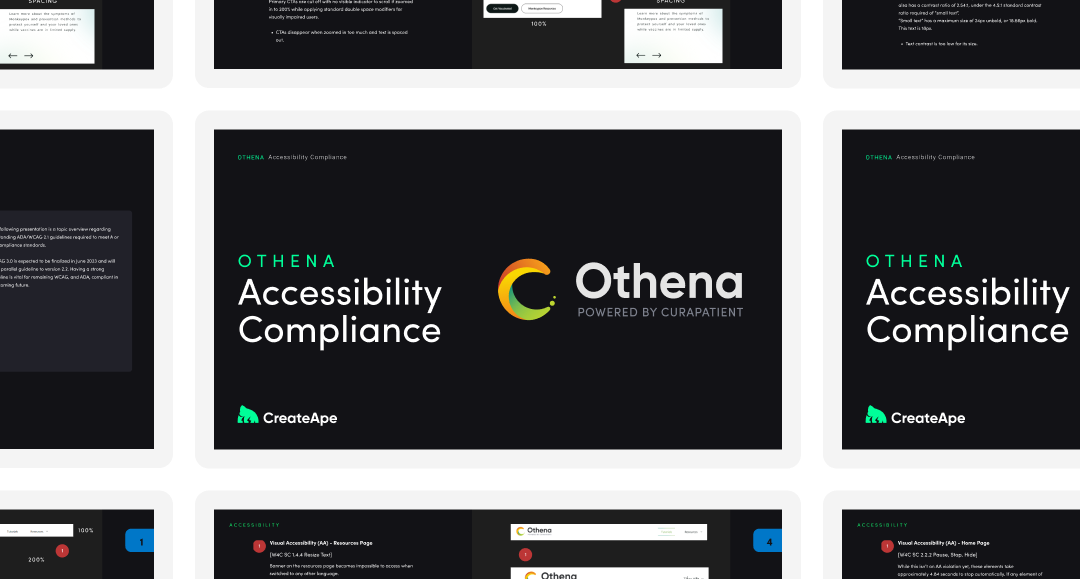
In healthcare, documentation is not optional. It is required.
Quality management standards such as ISO 13485 emphasize traceability across design, testing, and validation activities. A design system that embeds documentation into its structure becomes a powerful compliance asset rather than an administrative burden.
Effective documentation includes usage guidelines, interaction rules, risk considerations, and version history for every component. When maintained correctly, this documentation accelerates regulatory review, supports audit readiness, and allows teams to demonstrate design rationale with confidence.
Clinical UX research published through the National Institutes of Health has shown that inconsistent interface patterns and poor documentation increase clinician cognitive workload and hinder safe decision-making. A well-governed design system mitigates this risk by enforcing predictable structures and clear intent across healthcare products.
Building patterns that support real clinical workflows
Generic design systems are not sufficient for healthcare products.
Clinical workflows involve sensitive data, multi-step decision-making, cross-functional coordination, and diverse user populations that include clinicians, administrators, and patients. Components must be validated within realistic healthcare scenarios to ensure they reduce cognitive load and support safe task completion.
A systematic review published in BMJ Health Informatics found that usability failures in health IT systems frequently stem from inconsistent patterns, unclear workflows, and insufficient application of human factors principles. The review highlights that applying UX and human factors consistently across systems significantly improves safety and reduces user error.
Conclusion: design systems as a healthtech compliance strategy
For healthcare organizations, a design system is not merely a design initiative. It is a compliance enabler, a risk-reduction mechanism, and a scalability engine.
When compliance requirements, governance structures, documentation standards, and human factors principles are embedded into the system, UX becomes both safer and more scalable. Teams move faster without compromising validation. Clinicians experience less cognitive burden. Organizations gain a foundation capable of supporting growth across products, audits, and regulatory cycles.
In an industry where consistency equals safety and predictability supports compliance, healthtech companies do not scale through isolated screens. They scale through interconnected systems designed to evolve responsibly.